

|


|

LIN NEWS
- Home
- /
- LIN NEWS
- /
- Media
Media
[Op-Ed] Seok-ho Bang, Senior Advisor at LIN LLC: What It Takes for Korea to Truly Become One of the ‘AI Big Three’
2025.11.28.


Areas of Expertise
Professionals
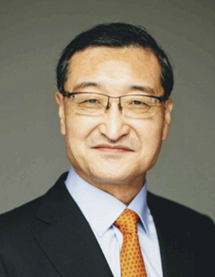
▲ Seok-ho Bang, Senior Advisor at LIN LLC
The Korean government has selected artificial intelligence (AI) as a new growth engine, writing a new chapter in history by once again seizing information technology (IT) as the lifeline for economic development, following the era of informatization.
However, AI is a complex variable that moves in conjunction with technological sovereignty, strategic independence, and global economic conflict. Europe, lamenting its fate of having become mere users of Big Tech companies from the U.S. and China, refers to its situation as a "digital colony." In response, they are pursuing a third way through diversified global cooperation, implementing strategies to define their own identity and leverage their advantages, such as developing proprietary AI models and constructing hyperscale AI data centers.
Amid such trends, there are concerns that overly optimistic expectations and misguided approaches to AI could intensify social, economic, and class conflicts. Furthermore, given survey results indicating that people often use AI primarily as a "friend for emotional connection," it is problematic if AI policy goals focus merely on enabling all citizens to use AI well and for free. This is because it could lead to greater side effects, such as the destruction of human relationships. The global market is shifting from developing merely "smarter" technology to creating practical AI that "better assists people" and forming the necessary ecosystem, making it unnecessary even to recall the philosophy of "human-centered AI" emphasized in our own Framework Act on Artificial Intelligence Price competition is also occurring, with only a handful of players expected to survive. However, if the ambition of joining the 'AI Big Three' is merely to achieve the rank of 3rd in the AI hierarchy after the U.S. and China, it holds no meaning in a global reality where the winner takes it all in a fight of capital.
Korea must consider how and in which sectors it can build an AI powerhouse. This requires not only independent technology development but also competition in application within individual industry sites, and the design of an "Open Sovereign AI" predicated on diversified global cooperation. The government's AI budget is significantly smaller than the investment volumes of Big Tech, and thus, it must clearly contain the will to build a "sustainable AI ecosystem"—something Big Tech cannot do—rather than simply creating a fleeting market. In this regard, the current reality—where the medical field, a priority option for an AI strategy that we are fully capable of executing, remains buried in the issue of medical school enrollment quotas—constitutes a major national loss. Europe, for example, announced a strategy this March through a special law to create an integrated personal medical information database and build a large-scale data-driven industrial ecosystem with not only medical institutions but also pharmaceutical, biotech, R&D, and insurance companies. The shift in the medical data ecosystem utilizing AI is triggering a tsunami in adjacent industries, such as changing the existing cost-reimbursement health insurance structure toward a disease prediction and prevention system. We possess the great advantage of centrally managing the personal medical information of 50 million citizens through public institutions like the National Health Insurance Service (NHIS) and the Health Insurance Review and Assessment Service (HIRA), yet we are failing to leverage it. We remain limited to data linkage primarily among medical institutions for treatment purposes and the construction of a personal health information portal. The shortcuts to becoming one of the AI Big Three and the practical implementation of Sovereign AI include: transforming our medical sector—which possesses sufficient competitiveness in manpower, technology, and infrastructure—into an expanded AI medical bio-industry ecosystem to achieve world-class status; and transitioning South Korea—already a powerhouse in automation with the world's highest industrial robot density—into a strategic base for the AI manufacturing ecosystem. For further details, please refer to the original article below:
Maeil Business Newspaper – Read the Original Article:
https://m.mk.co.kr/news/contributors/11370561
However, AI is a complex variable that moves in conjunction with technological sovereignty, strategic independence, and global economic conflict. Europe, lamenting its fate of having become mere users of Big Tech companies from the U.S. and China, refers to its situation as a "digital colony." In response, they are pursuing a third way through diversified global cooperation, implementing strategies to define their own identity and leverage their advantages, such as developing proprietary AI models and constructing hyperscale AI data centers.
Amid such trends, there are concerns that overly optimistic expectations and misguided approaches to AI could intensify social, economic, and class conflicts. Furthermore, given survey results indicating that people often use AI primarily as a "friend for emotional connection," it is problematic if AI policy goals focus merely on enabling all citizens to use AI well and for free. This is because it could lead to greater side effects, such as the destruction of human relationships. The global market is shifting from developing merely "smarter" technology to creating practical AI that "better assists people" and forming the necessary ecosystem, making it unnecessary even to recall the philosophy of "human-centered AI" emphasized in our own Framework Act on Artificial Intelligence Price competition is also occurring, with only a handful of players expected to survive. However, if the ambition of joining the 'AI Big Three' is merely to achieve the rank of 3rd in the AI hierarchy after the U.S. and China, it holds no meaning in a global reality where the winner takes it all in a fight of capital.
Korea must consider how and in which sectors it can build an AI powerhouse. This requires not only independent technology development but also competition in application within individual industry sites, and the design of an "Open Sovereign AI" predicated on diversified global cooperation. The government's AI budget is significantly smaller than the investment volumes of Big Tech, and thus, it must clearly contain the will to build a "sustainable AI ecosystem"—something Big Tech cannot do—rather than simply creating a fleeting market. In this regard, the current reality—where the medical field, a priority option for an AI strategy that we are fully capable of executing, remains buried in the issue of medical school enrollment quotas—constitutes a major national loss. Europe, for example, announced a strategy this March through a special law to create an integrated personal medical information database and build a large-scale data-driven industrial ecosystem with not only medical institutions but also pharmaceutical, biotech, R&D, and insurance companies. The shift in the medical data ecosystem utilizing AI is triggering a tsunami in adjacent industries, such as changing the existing cost-reimbursement health insurance structure toward a disease prediction and prevention system. We possess the great advantage of centrally managing the personal medical information of 50 million citizens through public institutions like the National Health Insurance Service (NHIS) and the Health Insurance Review and Assessment Service (HIRA), yet we are failing to leverage it. We remain limited to data linkage primarily among medical institutions for treatment purposes and the construction of a personal health information portal. The shortcuts to becoming one of the AI Big Three and the practical implementation of Sovereign AI include: transforming our medical sector—which possesses sufficient competitiveness in manpower, technology, and infrastructure—into an expanded AI medical bio-industry ecosystem to achieve world-class status; and transitioning South Korea—already a powerhouse in automation with the world's highest industrial robot density—into a strategic base for the AI manufacturing ecosystem. For further details, please refer to the original article below:
Maeil Business Newspaper – Read the Original Article:
https://m.mk.co.kr/news/contributors/11370561
Areas of Expertise
Professionals
| Professionals |


|


| Share |
|


